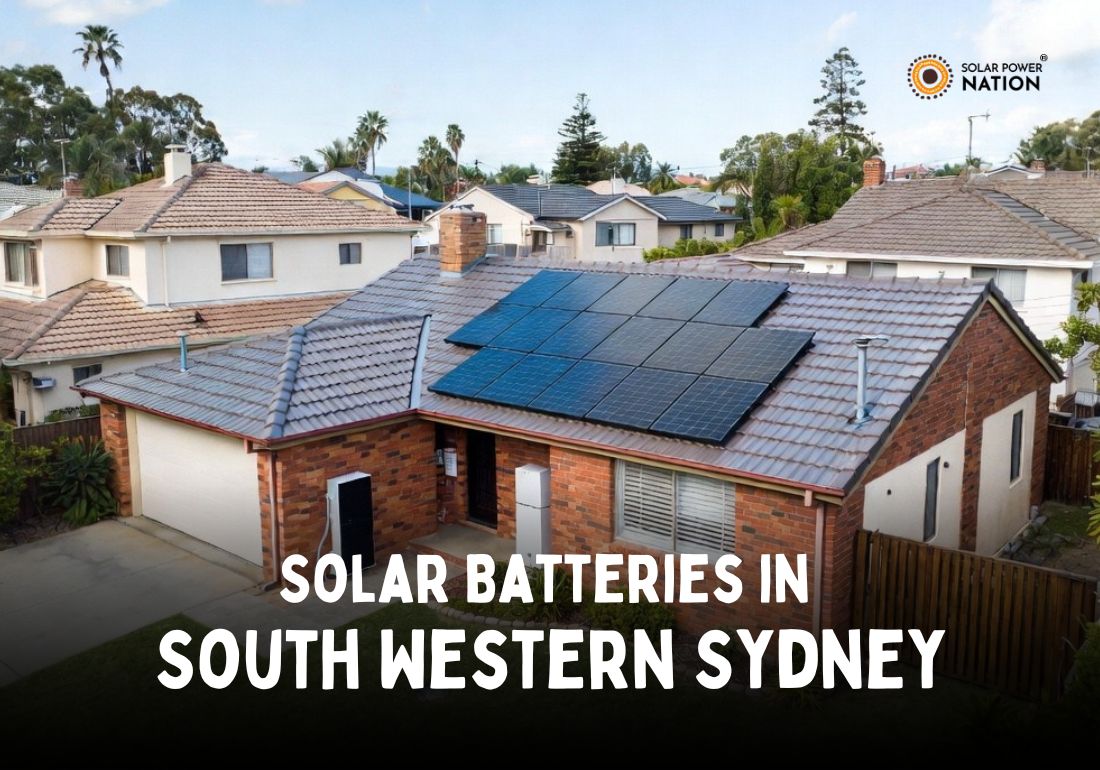
Electricity prices across New South Wales have increased significantly in recent years, and many households are looking for ways to reduce their energy bills and gain more control over their power usage.
Across South Western Sydney, solar batteries are quickly becoming one of the most popular upgrades for homeowners with solar panels.
From Camden, Oran Park, Narellan and Campbelltown to Liverpool, Fairfield, Gregory Hills, Leppington and Edmondson Park, more households are installing battery systems to store solar energy and reduce reliance on expensive grid electricity.
In this guide, we’ll explain everything homeowners in South Western Sydney need to know about installing solar batteries, including costs, rebates, and why larger battery systems are becoming the preferred choice for modern homes.
Why Solar Batteries Are Growing Rapidly in South Western Sydney
South Western Sydney is one of the fastest-growing regions in Greater Sydney, with major residential growth across suburbs such as:
- Camden
- Oran Park
- Narellan
- Gregory Hills
- Leppington
- Austral
- Edmondson Park
- Campbelltown
- Liverpool
- Fairfield
- Hoxton Park
- Bonnyrigg
- Prestons
- Bringelly
- Harrington Park
- Denham Court
The region spans several major local government areas including Camden, Campbelltown, Liverpool and Fairfield.
Many homes in these suburbs were built in the last decade and already have rooftop solar systems installed. However, solar panels alone cannot store electricity for later use.
Without a battery, most solar energy generated during the day is exported to the grid for a small payment known as a feed-in tariff.
A solar battery solves this problem by allowing households to store excess solar energy and use it later at night, when electricity prices are highest.
Average Electricity Usage in South Western Sydney Homes
To understand why batteries are so valuable, it’s important to look at electricity usage.
The average Australian household consumes roughly 16–20 kWh of electricity per day, depending on household size and lifestyle.
Sydney households specifically average around 16.5 kWh per day, though larger families use significantly more.
Many homes across South Western Sydney are larger properties with:
- Multiple air conditioning systems
- Swimming pools
- Electric hot water systems
- Home offices
- Electric vehicles
Because of this, daily energy consumption in many homes can exceed 25–40 kWh per day, particularly during summer months when air conditioning usage increases.
This is one reason why larger battery systems are becoming increasingly popular across the region.
How Solar Batteries Work
A solar battery stores excess electricity generated by your solar panels during the day.
The system works in four simple steps:
- Solar panels generate electricity from sunlight.
- Your home uses the electricity it needs immediately.
- Excess electricity charges the battery.
- The battery powers your home at night.
Instead of selling solar electricity cheaply back to the grid, homeowners can store their solar power and use it later.
For many households, this significantly increases the value of their solar system
Solar Battery Rebates Available in NSW
Government incentives are helping accelerate battery adoption across South Western Sydney.
Federal Battery Incentives
Australia introduced a national initiative designed to support battery installations by providing financial incentives that can reduce the cost of battery systems by around 30% depending on system size and eligibility.
The program has triggered a rapid increase in battery installations across Australia, with New South Wales accounting for a large share of new installations.
NSW Battery Incentives
In addition to federal support, NSW offers incentives through the Peak Demand Reduction Scheme (PDRS).
Under this scheme, households installing a solar battery may receive additional incentives and financial benefits when connecting their battery to a Virtual Power Plant (VPP).
These rebates significantly reduce the upfront cost of installing a solar battery.
Why Larger Batteries Are Becoming Popular
Historically, most home battery systems were installed between 10 kWh and 15 kWh.
However, energy consumption in modern homes has increased significantly.
Today, many households are installing large battery systems between 30 kWh and 50 kWh.
There are several reasons for this trend.
Rising electricity prices
Electricity costs across NSW have increased significantly over the past decade, putting pressure on household budgets.
Larger battery systems allow households to reduce reliance on grid electricity.
Electric vehicles
Electric vehicles are becoming increasingly common across South Western Sydney.
Charging an EV can add 10–15 kWh of electricity demand per day, making larger batteries valuable for storing solar energy.
Larger homes
New homes across suburbs like Gregory Hills, Austral and Leppington are significantly larger than older Sydney homes and typically use more electricity.
Future-proofing
Installing a larger battery system today ensures homeowners are prepared for increasing energy demand in the future.